
Approved Use: Aquam volupis quat que est et que qui quam que od quiantium ipsanias dolupiet exernam quo millibus acilis dolor sumque volor sim fugit, is nobit Orrovid. READ MORE

Aquam volupis quat que est et que qui quam que od quiantium ipsanias dolupiet exernam quo millibus acilis dolor sumque volor sim fugit, is nobit Orrovid: READ LESS

Thyroid Eye Disease Symptoms and Signs

Explore potential TED symptoms and how they progress.

Thyroid Eye Disease Symptom Chart*

Learn about the symptoms of TED and how they may progress over time.

Dry, gritty eyes

Dry, gritty eyes

Dry, gritty eyes (irritated eyes). Your eyes may feel dry or sandy.

Talk to your doctor about your symptoms. Images are for demonstration purposes only.

Feeling of something stuck in the eye

Feeling of something stuck in the eye

The feeling of something stuck in your eye. It may feel like a piece of dust or dirt is stuck in your eye even though nothing is really there.

Your doctor may call this feeling “foreign body sensation.”

Talk to your doctor about your symptoms. Images are for demonstration purposes only.

Watery, teary eyes

Watery, teary eyes

Watery, teary eyes. This may be confused with allergies or an infection at first.

Talk to your doctor about your symptoms. Images are for demonstration purposes only.

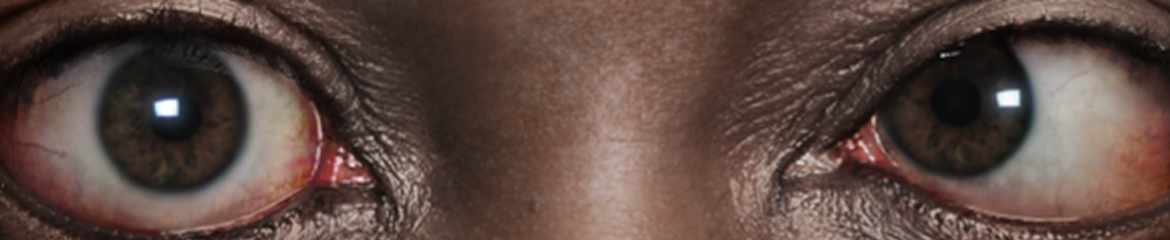
Red eyes

Red eyes

Red eyes. Your eyes and eyelids may look red or bloodshot. This may be confused with allergies or an infection at first.

Your doctor may refer to this redness of the eyelids as erythema.

Talk to your doctor about your symptoms. Images are for demonstration purposes only.

Eye pain and eye pressure

Eye pain and eye pressure

Eye pain and eye pressure in, around, or behind your eye. The pressure may also cause some people to experience headaches.

Talk to your doctor about your symptoms. Images are for demonstration purposes only.

Swollen, puffy eyelids

Swollen, puffy eyelids

Swollen, puffy eyelids. This may be confused with allergies or an infection at first.

Your doctor may refer to this change as eyelid edema.

Talk to your doctor about your symptoms. Images are for demonstration purposes only.

Bulging eyes

Bulging eyes

Bulging eyes. One or both eyes may bulge forward because of the swelling of fat and muscle tissues behind your eyes.

In a study with 7O patients, 64% of TED patients had this symptom. Your doctor may call this change proptosis or exophthalmos.

Talk to your doctor about your symptoms. Images are for demonstration purposes only.

Eyelid retraction

Eyelid retraction

Eyelid retraction (pulled-back eyelids). You may find it hard to close your eyes all the way.

This happens in about 9O% of people with TED.

Talk to your doctor about your symptoms. Images are for demonstration purposes only.

Misaligned eyes

Misaligned eyes

Misaligned eyes (eyes that point in different directions). You may notice that the position of your eyes does not match.

Restricted eye muscle movement occurs in up to 4O% of people with TED. In more severe cases, the eye muscles can be affected at resting position, leading to the misalignment of the eyes. Your doctor may call this strabismus.

Talk to your doctor about your symptoms. Images are for demonstration purposes only.

Sensitivity to light

Sensitivity to light

Sensitivity to light. You may find sunlight or bright indoor light uncomfortable or even painful.

Your doctor may refer to this as photophobia.

Talk to your doctor about your symptoms. Images are for demonstration purposes only.

Blurry vision

Blurry vision

Blurry vision occurs when parts of your field of vision are lost.

In a study of 1OO patients with TED, 3O% experienced blurry vision.

Talk to your doctor about your symptoms. Images are for demonstration purposes only.

Double vision

Double vision

Double vision. You may see 2 images of the same object.

In one clinical study with 216 patients, 55% of people with TED had double vision. Your doctor may refer to this change as diplopia.

Talk to your doctor about your symptoms. Images are for demonstration purposes only.

Loss of vision / colour vision

Loss of vision / colour vision

Loss of vision / colour vision (partial or full). Contact a doctor right away if you are experiencing loss of vision or colour vision because this could mean your sight is at risk.

Based on one registry analysis with 41,211 patients with TED, approximately 18% of patients presented with vision-threatening conditions including optic neuropathy and corneal keratitis, which can lead to vision loss.

Talk to your doctor about your symptoms. Images are for demonstration purposes only.

NEXT STEPS

Early diagnosis and preventative management are recommended by professional organizations. Contact your doctor right away if you experience any of the serious symptoms, new symptoms, or worsening symptoms.

If you have any of these symptoms, it is important to track and share them with your doctor.

Remember that TED affects everyone differently

While some symptoms may get better over time, others may not. It is even possible for certain risk factors, such as smoking or radioactive iodine treatment, to cause your TED to flare.

TED is an ongoing condition that can get worse if left unmanaged

Eye icon

Use the list of TED symptoms for
further discussion with your doctor.

*This guidance is not meant to provide medical advice and is for general information purposes only. Some cases of TED will stabilize and then gradually improve. TED symptoms may present differently for each person and at different points in their disease progression.

TED, Thyroid Eye Disease.